
Message Us 24/7
License #: TACLA00137980E

Why Is My AC Vent Sweating? Causes and Fixes for Houston Homes

If you’ve ever spotted water droplets clinging to a ceiling vent — or a damp ring spreading on the drywall around it — you’ve seen “sweating” in action. It’s common in Houston, it’s usually a symptom rather than the real problem, and it’s worth understanding before it leaves a stain or feeds mold.
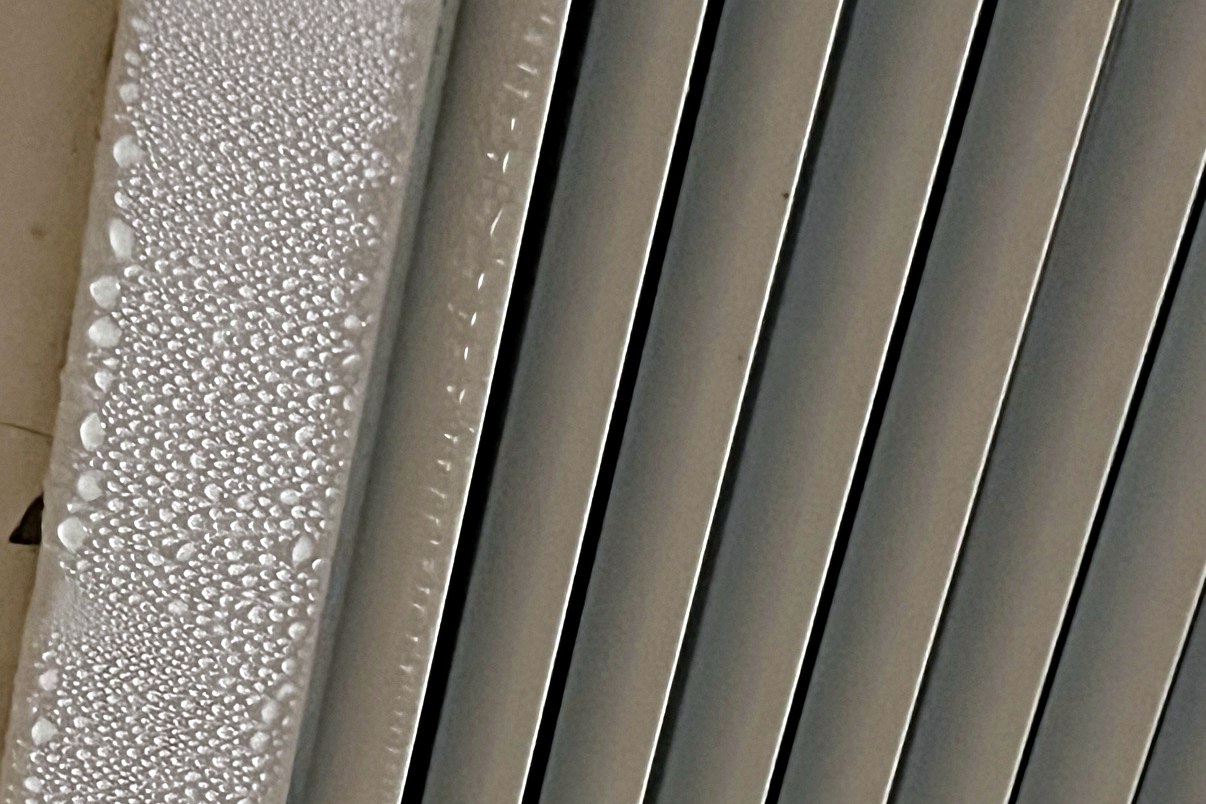
Sweating air conditioning vent with water droplets on the frame

Why Does an AC Vent Sweat? A Simple Dew Point Explanation

Your AC sends cold supply air — often around 55°F — through metal vents. That cold air chills the vent’s surface. When the surface gets colder than the dew point of the surrounding room air, moisture in the air condenses on it — exactly like a cold glass of sweet tea sweating on a summer porch.

Houston is where this goes wrong most often: our outdoor humidity keeps indoor dew points high, often in the upper 60s or even 70s. So even a properly running AC can push a vent surface below that line, and the vent sweats.
Common Causes of AC Vent Sweating in Houston Homes

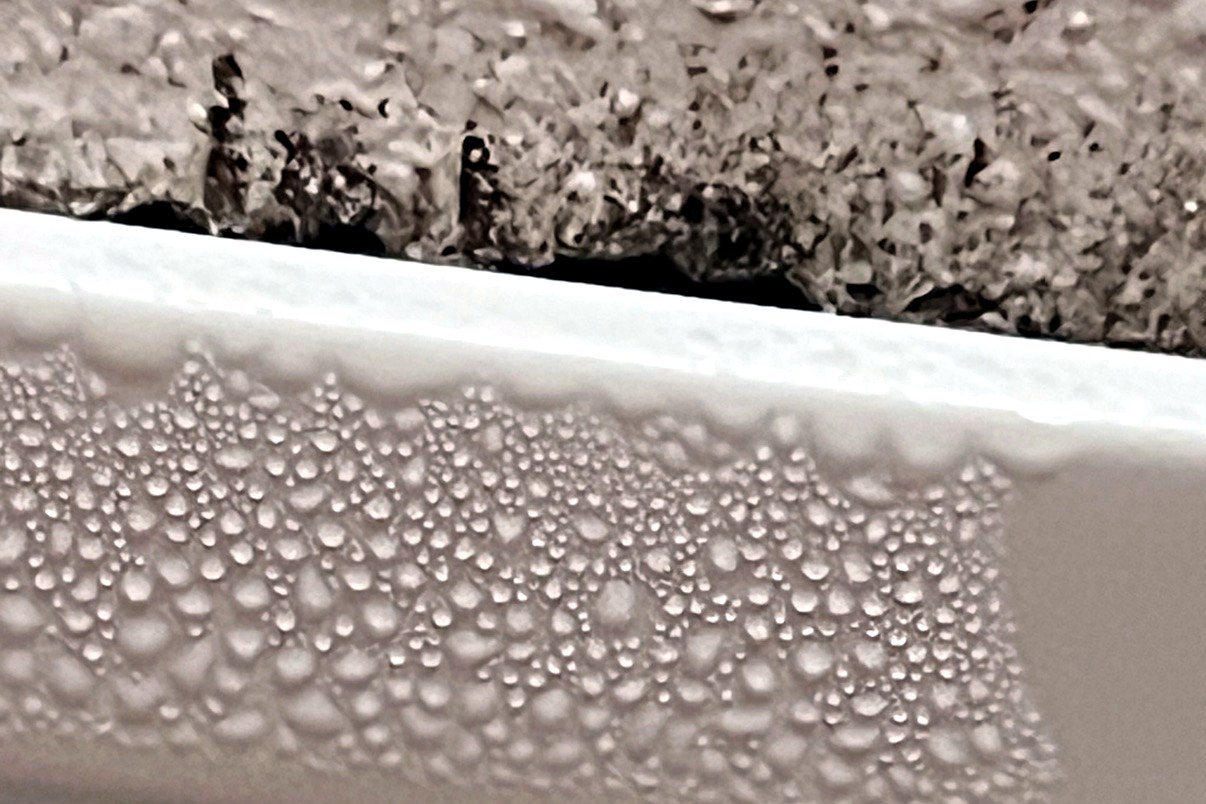
Condensation droplets on an AC vent frame caused by humidity

  • High indoor humidity — if your home sits above about 60% relative humidity, nearly any cold vent can sweat.
  • An uninsulated or poorly insulated vent boot or duct — especially in a 140°F attic, where a bare metal boot is blasted with hot air on one side and cold air on the other.
  • Gaps around the boot — even a small gap lets humid attic air wash over the cold metal.
  • Supply air that’s too cold from low airflow — a dirty filter, closed or blocked vents, or blower problems make the coil colder than it should be.
  • An oversized or short-cycling system — it blasts cold air and shuts off before running long enough to pull moisture out of the air.
  • Everyday moisture sources — long hot showers, cooking without the range hood, and unvented dryers all push the dew point higher.

What You Can Check Yourself

  1. Replace the air filter. A clogged filter is the number-one airflow thief — check it monthly during cooling season.
  2. Keep every supply vent open. Closing vents “to save energy” backfires: it raises static pressure and makes the air coming out colder.
  3. Set the thermostat fan to AUTO, not ON. With the fan ON, air keeps blowing over a warm, wet coil between cycles and re-humidifies the house.
  4. Watch your indoor humidity. Aim for about 45–55%. A simple hygrometer from the hardware store tells you in seconds.
  5. Notice the pattern. One sweating vent usually means a local problem — missing insulation or a gap around that boot. Every vent sweating points to a whole-house issue: high humidity or an airflow/system problem.

New to filter changes? Read our guide: How Often Should You Change Your AC Filter in Houston?

Weak airflow can also make a vent sweat — read our guide: AC Airflow Problems: Signs Your Houston Home Isn’t Getting Enough Air

Fixes a Professional Should Handle

Once you’ve ruled out the easy stuff, it’s time to call a technician:
  • Insulating and sealing the vent boot and duct connections — this fixes most single-vent sweating for good.
  • Airflow and refrigerant checks — low refrigerant or restricted airflow makes supply air colder than designed.
  • Humidity control options — thermostat settings, or a whole-home dehumidifier for homes that chronically sit above 60%. A whole-home dehumidifier works alongside your AC to keep humidity in the comfort zone — learn more on our Air Quality page.

Why You Shouldn’t Ignore It

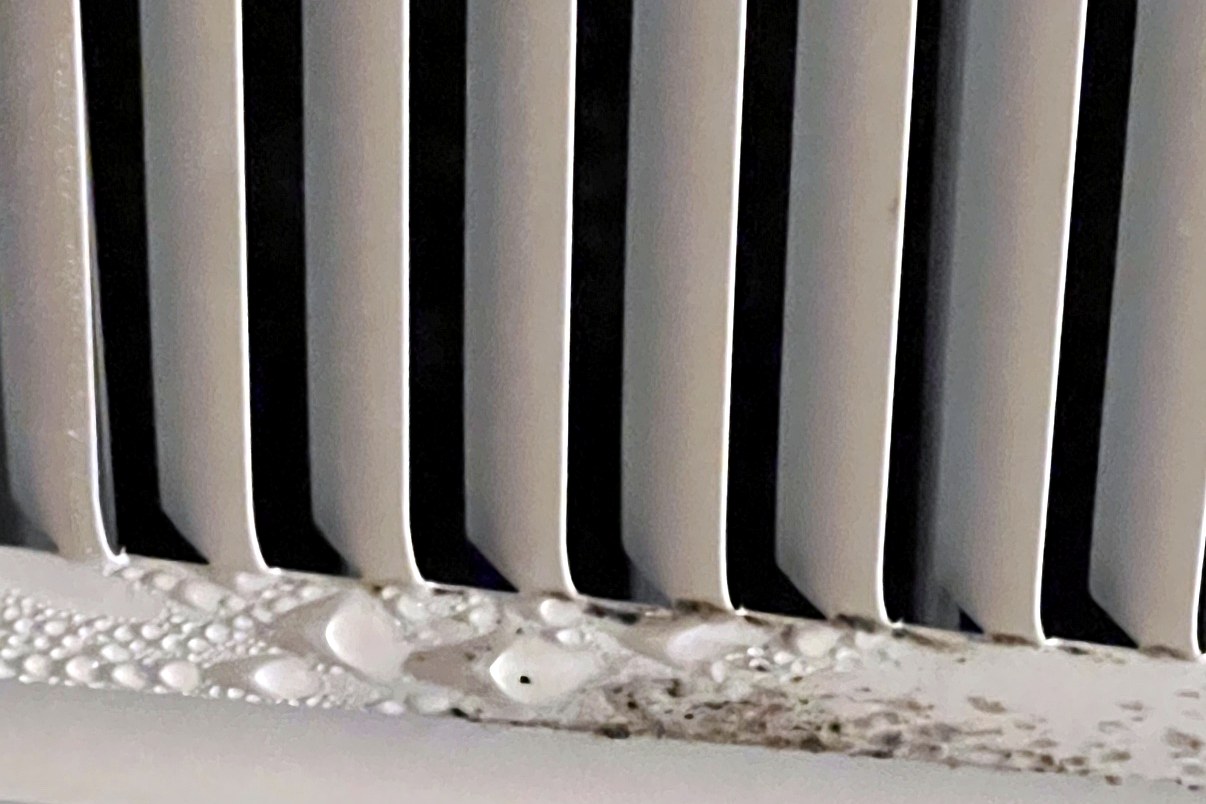
AC supply vent sweating with condensation droplets in a Houston home

A little condensation sounds harmless until it drips: water stains on ceilings and drywall, peeling paint, and — the one nobody wants — mold growth around the vent. The photo at the top of this post shows early mold spots forming right at a sweating vent. Catch it early and it’s a small fix; ignore it and it turns into drywall repair plus mold remediation.

Get a Professional Look at Your Sweating Vents

Not sure whether your sweating vents are a quick filter swap or something deeper? Top Texas Choice can find out fast. Book our Tune-Up Special — $120 for the first system, $80 for each additional — and we’ll check airflow, the filter, and humidity levels while we’re there. Call (346) 346-1177 or book online: https://toptexaschoice.com/#book-service
Condensation droplets on an AC vent frame caused by humidity