Message Us 24/7

When the first real cold snap hits Houston, the last thing you want is to turn on the heat and feel cool air coming out of your vents. Before you assume the furnace is broken, know this: several of the most common causes are simple fixes you can check yourself in a few minutes. Others are signs it’s time to call a professional. Here’s how to tell the difference.
A furnace doesn’t produce warm air instantly. When the burner fires, it takes a few minutes for the heat exchanger to warm up, and the blower may push out room-temperature air first. If the air warms up within a few minutes, your system is probably fine.
Then check the thermostat, because this is the number one culprit. Make sure it is set to HEAT (not COOL or OFF) and set a few degrees above the current room temperature. If the fan is set to ON instead of AUTO, the blower runs constantly — even between heating cycles — and pushes out unheated air that feels cold. Switch the fan to AUTO and see if the problem disappears. If your thermostat runs on batteries, weak batteries can also cause erratic behavior, so replace them if they haven’t been changed in a while.
A clogged air filter restricts airflow through the furnace. When airflow drops, the heat exchanger overheats, and a safety device called the high-limit switch shuts the burners off to protect the system — while the blower keeps running, sending cool air through your vents. This is one of the most common causes of a furnace blowing cold air, and it’s also the easiest to fix: replace the filter, and the system often returns to normal.
In Houston homes, where dust, pollen, and pet hair build up fast, check your filter every month during heating season. If you haven’t changed it since last winter, start there. Keep all supply vents open, too — closing vents in unused rooms doesn’t save energy, it raises pressure in the system and can trip the same limit switch.
If the air stays cold and the thermostat and filter check out, the furnace may not be igniting at all. Modern furnaces use an electronic igniter rather than a standing pilot light, and igniters wear out over time. A failed igniter, a tripped rollout switch, or an interrupted gas supply can all leave the blower running with no heat behind it.
You can safely check a couple of things: make sure the furnace’s power switch is on and the circuit breaker hasn’t tripped, and confirm that other gas appliances in the home are working. But do not attempt to relight or repair burners, igniters, or gas valves yourself — gas and combustion work belongs to a trained technician, and a furnace that won’t ignite should be diagnosed properly rather than forced back on.
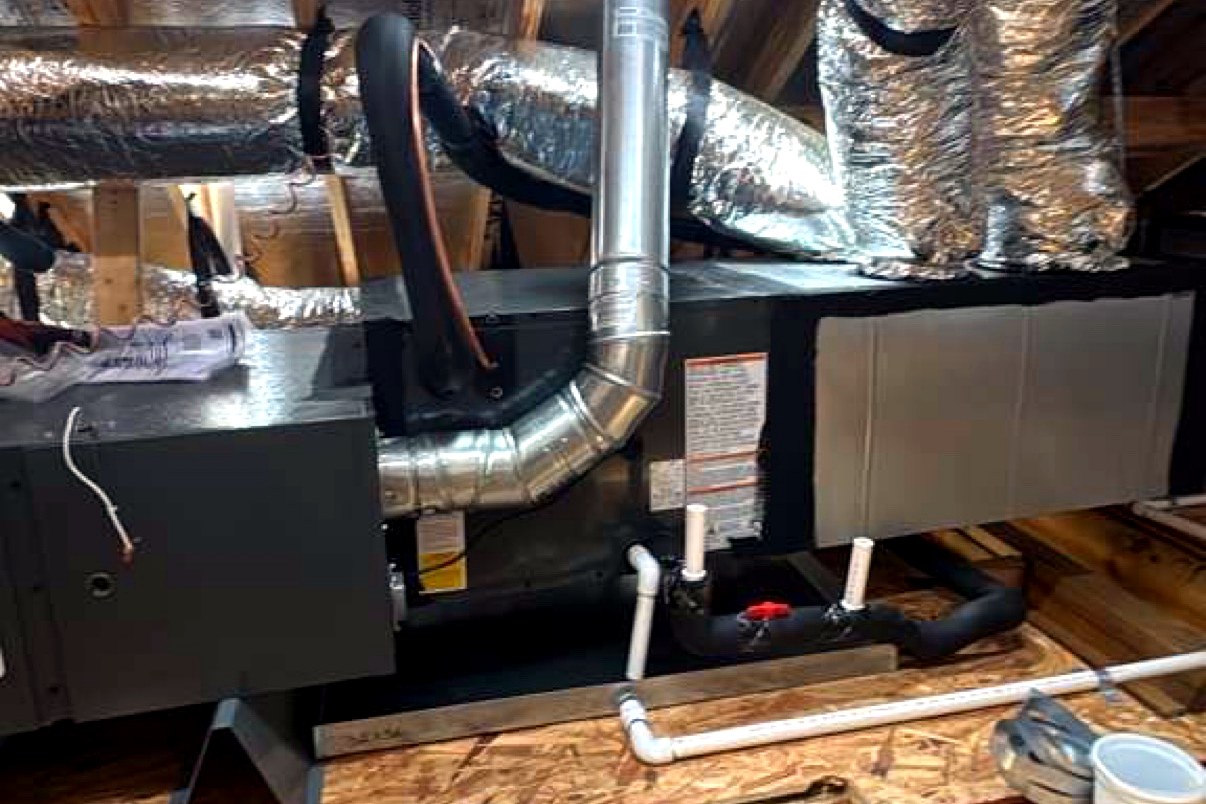
Sometimes the furnace is heating just fine, but the air cools down before it reaches you. Leaky or poorly insulated ducts in a cold attic can pull in cold air or lose heat along the run, so the air arriving at distant rooms feels lukewarm or cold. This is especially common in rooms farthest from the furnace. If some rooms heat well while others stay cold, duct leaks or disconnected duct sections are a likely suspect — and a duct inspection can find them. For more on a related symptom, see our heater smells guide.
Call a technician promptly if you notice any of these: the furnace repeatedly starts and stops, you smell gas or a strong burning odor that doesn’t fade, the carbon monoxide detector sounds, the furnace trips its breaker more than once, or the cold-air problem returns right after you change the filter. These can point to a failing limit switch, ignition trouble, or a cracked heat exchanger — none of which are homeowner fixes, and a cracked heat exchanger in particular is a safety issue that needs immediate attention.
Start with the simple checks: thermostat on HEAT, fan on AUTO, a clean filter, and open vents. Those solve the problem more often than Houston homeowners expect. If the cold air persists, or any warning sign shows up, a heating tune-up in Houston will find the real cause before a cold night turns into a no-heat emergency.
Ready for a professional check? Top Texas Choice offers a Heating Tune-Up Special — $120 for the first system and $80 for each additional system. Call (346) 346-1177 or book online.
Before the next cold snap arrives, read our guide: How to Prepare Your HVAC System for a Houston Freeze