Message Us 24/7

If every room in your house feels comfortable except one, you are not imagining it — and you probably do not need a whole new heating system to fix it. In Houston, uneven temperatures are common, especially in fall when the heat first comes on. Rooms over the garage, rooms at the end of a long duct run, converted patios, and north-facing bedrooms often lag behind the rest of the house. The good news is that the cause is usually simple: air is not reaching that room in the right amount, or the room is losing heat faster than the system can replace it. Here is how to track down the reason, what you can check yourself, and when it is time to call a professional.
Before assuming a duct problem, check the room itself. Make sure the supply vent is fully open and not blocked by furniture, curtains, a rug, or a bed pushed against the wall. A closed or half-closed vent does more than starve that one room — it raises pressure in the rest of the duct system and can make the whole system work harder. Keep all vents open, even in rooms you rarely use. Next, look at where the thermostat sits. A thermostat in a warm hallway, near a sunny window, or above a heat source can shut the system off before the cold room ever catches up. That is one reason a single thermostat can leave one room behind: it only knows the temperature where it lives, not in the coldest room. Closing interior doors all day can have the same effect, cutting the cold room off from return airflow. Try leaving the door open and giving the system a full heating cycle to see if the gap narrows.
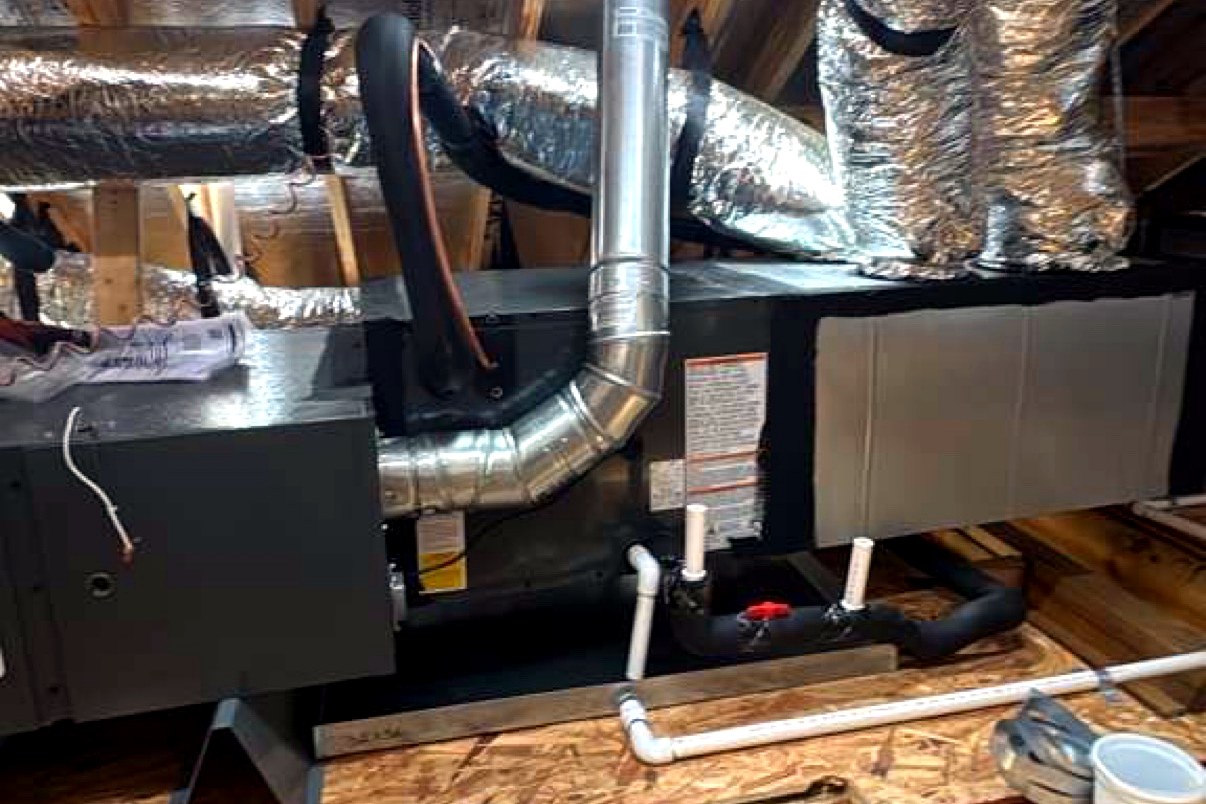
In many Houston homes, the ducts run through a hot or cold attic, and a surprising amount of heated air never reaches its destination. Leaky duct joints, disconnected sections, crushed flexible duct, and long duct runs all reduce airflow to the farthest rooms. A room at the end of the line gets whatever air is left after every other vent has taken its share. Signs of a duct problem include weak airflow from that room’s vent compared with others, a vent that barely blows warm air, rattling or whistling sounds in the attic, and dust streaks around duct joints. If you can safely look in the attic, check for visibly disconnected or kinked flexible duct — but do not crawl through insulation or step off the joists to reach it. For a deeper look at this cause, read our guide: Leaky Ducts in Houston Homes: Signs, Energy Loss, and Fixes. Sealing and insulating duct connections is a professional job, and it often improves comfort in the whole house, not just the cold room.
Sometimes the system is fine and the room is the problem. Rooms over an unheated garage, rooms with large single-pane windows, rooms with little attic insulation above them, and converted spaces that were never properly insulated lose heat much faster than the rest of the house. On a chilly Houston morning, that heat loss shows up as a room that never quite warms up, even when the vent is blowing warm air. Check for drafts around windows and exterior doors in that room, feel for cold spots along outside walls, and look for missing weatherstripping. Heavy curtains at night can help with drafty windows, and sealing obvious air leaks is a low-cost first step. If the room is an addition or a converted garage or patio, it may never have been connected to the duct system properly in the first place — that is worth a professional assessment rather than a portable heater, which only masks the problem and adds to your electric bill.
Even with sound ducts, a system can be out of balance. Dampers inside the ductwork control how much air goes to each branch, and if they were never adjusted — or were bumped during attic work — one branch can be starved. A dirty air filter also cuts airflow everywhere, and the farthest room usually suffers first, so replace the filter if it is overdue. A blower that is struggling, or a system that short-cycles and shuts off before air has circulated, can leave distant rooms cold too. Do not try to fix balance by closing vents in warm rooms. That raises static pressure, strains the blower, and can freeze a coil in cooling season or overheat a furnace in heating season. Proper balancing is done at the dampers and registers, with airflow measured — not by shutting vents.
Call for help if airflow from that vent stays weak after the basic checks, if you suspect a disconnected or leaky duct in the attic, if the room is an addition that was never properly connected, or if several rooms are uneven at once. A technician can measure airflow at each register, inspect the ductwork and dampers, check the blower and filter setup, and seal and insulate duct connections. Fixing the real cause beats living with a space heater in one room all winter.
Uneven temperatures are annoying, but they are usually fixable — and catching a duct or airflow problem early can also cut your energy bills. If one room in your Houston home just will not warm up, a heating tune-up in Houston is a good first step: our technician will check airflow, filters, and system operation and point you to the real cause. Take advantage of our Tune-Up Special — $120 for the first system and $80 for each additional system. Call Top Texas Choice at (346) 346-1177 or book online.