Message Us 24/7

If you have ever noticed a large metal box sitting on the roof of a small business — or on a slab beside a Houston home — you have probably seen a packaged HVAC system. Unlike the split systems found in many houses, where one part sits outside and another lives in the attic or a closet, a packaged system puts everything into a single cabinet outdoors. For some Houston homes and light commercial buildings, that one-box design is a smart fit. Here is how it works, and what to know before you buy or maintain one.
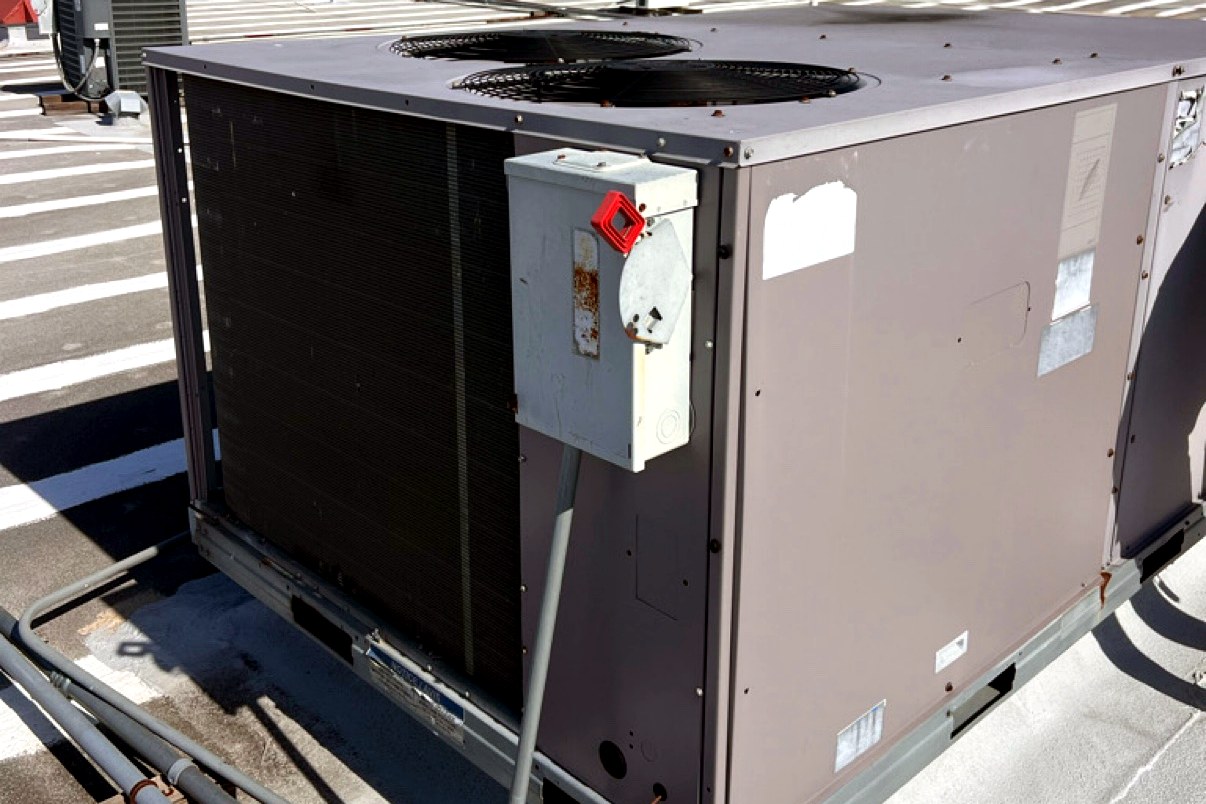
A packaged unit combines the compressor, condenser coil, evaporator coil, and blower fan in one weatherproof cabinet. In Houston, these units usually sit on a rooftop or on a concrete pad beside the building, and a short run of ductwork carries conditioned air inside. Most packaged units are either a packaged air conditioner paired with electric heat strips or a packaged heat pump that both heats and cools. Because everything is in one place, a technician can service the whole system from outside, without crawling through an attic.
In a split system, the noisy compressor lives outdoors while the indoor coil and blower sit inside the home. That separation keeps equipment noise out of the living space and protects the indoor parts from weather, but it needs indoor space for an air handler and a furnace. A packaged system needs no indoor equipment room at all, which makes it a good option for homes with limited attic or closet space, additions, and light commercial buildings such as offices and small retail shops. The trade-off is that all of the equipment sits outside in Houston’s heat, humidity, and storms.
The advantages are real: installation is often simpler because the unit arrives pre-assembled and pre-charged, there is no indoor unit taking up closet space, and maintenance visits are straightforward since everything is in one cabinet. On the downside, a packaged unit is fully exposed to the weather, which can shorten its life compared with a sheltered split system — most last around 15 years with good care, a bit less if maintenance is skipped. Because the blower and compressor sit in one box, a worn part can also be a little louder outside the building than a split system’s outdoor unit alone.
A packaged system needs the same basic care as any HVAC system, with a couple of extras. Change or clean the filter on schedule, because a clogged filter strains the blower and cuts airflow. Keep at least two feet of clearance around the unit, trimming back shrubs and clearing leaves and debris from the cabinet so air can move freely. Have the coils cleaned and the refrigerant charge, electrical connections, and duct connections checked at least once a year — Houston’s long cooling season and salty, humid air are hard on outdoor equipment. If your system is not keeping up, it is a good idea to read our guide on how long an AC lasts in Houston before deciding between repair and replacement.
Call for service if the unit runs constantly without reaching the set temperature, if you hear grinding, squealing, or loud rattling from the cabinet, if you notice water pooling around the base, or if your energy bills climb for no clear reason. These can point to a failing capacitor or blower motor, a clogged condensate drain, or low refrigerant — all problems that get more expensive the longer they run. A yearly AC tune-up in Houston catches most of them early.
A packaged unit is worth considering if you are replacing a system in a home with little indoor space, building an addition, or outfitting a light commercial space where a rooftop unit keeps equipment out of the way. It is less ideal if you want the quietest possible indoor setup or if your home already has a well-placed indoor air handler. Either way, proper sizing matters: an oversized unit will short-cycle and leave humidity behind, while an undersized one will run all day and still fall short. A load calculation, not a guess, should decide the size.
Ready to keep your system running its best? Top Texas Choice offers our Tune-Up Special: $120 for the first system and $80 for each additional system. Call (346) 346-1177 or book online to schedule your visit. We serve residential and light commercial customers across the Greater Houston area.