Message Us 24/7

If some rooms in your Houston home never seem to cool properly while others feel fine, the problem may not be your air conditioner at all. It may be your ducts. Leaky ducts are one of the most common — and most overlooked — causes of high energy bills and uneven comfort in Houston homes, especially when ductwork runs through a hot attic.
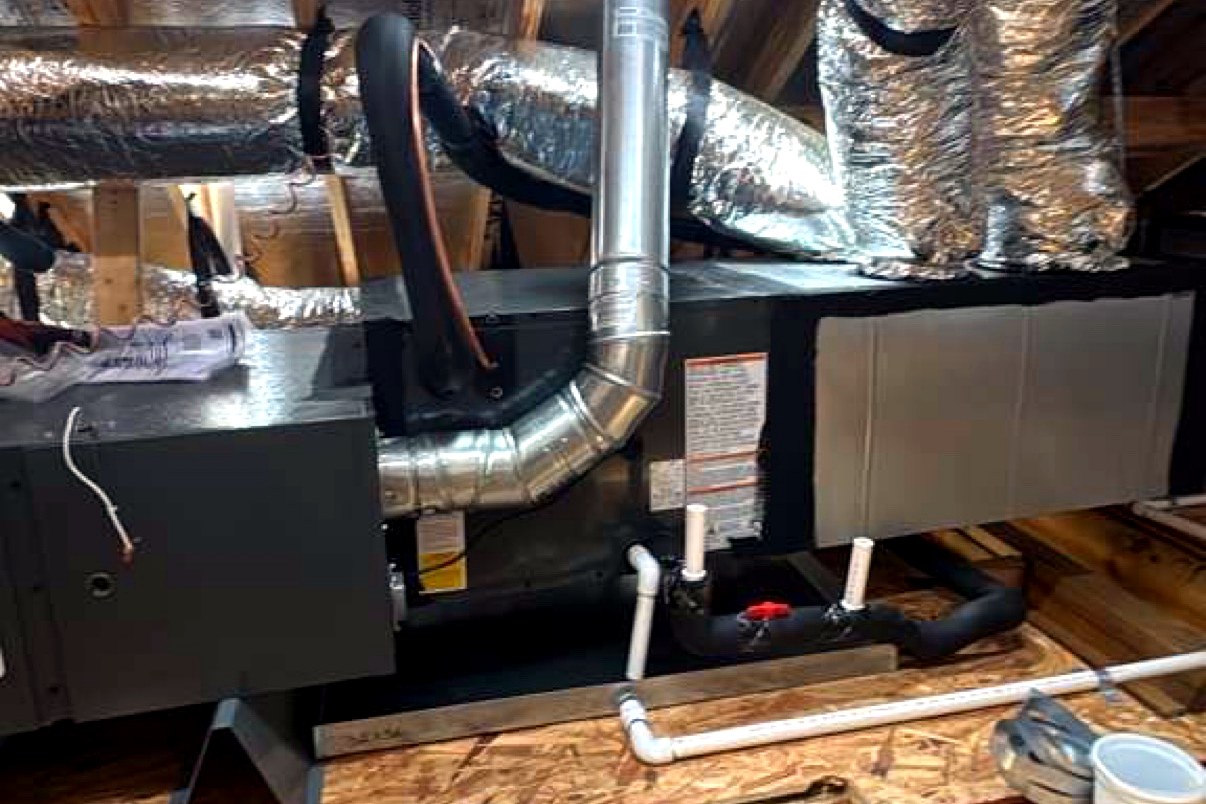
Your duct system is the network of metal or flexible tubes that carries cooled air from your air conditioner to every room. Leaky ducts have gaps, loose connections, or tears where that cooled air escapes before it reaches its destination. Instead of cooling your living room, that air ends up in the attic, between walls, or under the house. Your system then has to run longer and work harder to reach the temperature on your thermostat.
In Houston, this problem is worse than in milder climates. Attics here can reach well over 120 degrees on a summer afternoon, and many homes have long duct runs through that attic space. Even a small leak means your system is fighting extreme heat just to deliver air to a bedroom.
Leaky ducts do not always announce themselves, but homeowners often notice a pattern. Watch for these signs:
Any one of these signs can have more than one cause, which is why a proper check matters. But when several show up together, duct leakage is a strong suspect. If weak airflow is your main symptom, read our guide to AC airflow problems for the full list of causes and checks.
Age is a factor: older duct systems, and the tape or connections used decades ago, break down over time. Flexible ducts can sag, kink, or get crushed where they cross attic framing. Work done in the attic — insulation, roofing, or pest work — can accidentally pull a duct joint loose. And because so much Houston ductwork sits in unconditioned attic space, every leak loses air into the hottest part of the house.
Sealing matters more here than in a home where ducts run inside conditioned space. A leak into a Houston attic is not just wasted air; it is air your system paid to cool, dumped into a space that is often 40 degrees hotter than your living room.
You can do a few safe, simple checks before calling a technician. Start with the basics: replace a dirty filter, because restricted airflow makes every duct problem worse, and keep supply vents open in every room. Closing vents does not save energy; it raises pressure in the ducts and can push more air out through leaks.
If you can see duct connections safely — for example, where a duct meets the air handler in an accessible area — look for obvious gaps, loose joints, or sections that have come apart. Do not climb into a hot attic or walk on attic framing if you are unsure of your footing; that check is best left to a technician with the right equipment.
Also compare rooms: if only one room is uncomfortable, the issue may be a single run or a blocked vent. If the whole house struggles and bills are climbing, a system-wide duct problem is more likely.
A technician will inspect the ductwork, check airflow, and look for disconnected or damaged sections. Leaks are sealed properly with mastic sealant or metal-backed tape and mechanical fasteners — not ordinary cloth duct tape, which dries out and fails in a hot attic. Damaged or crushed sections may need repair or replacement, and exposed ducts should be properly insulated so cooled air stays cool on its way to each room.
A thorough visit also checks the system behind the ducts: airflow, blower performance, and refrigerant charge, because a system that is low on airflow or charge will not cool well even with sealed ducts. That is why a regular AC tune-up in Houston is a good first step when comfort or bills start slipping — it catches airflow and duct issues before they turn into a breakdown.
Do not ignore leaky ducts. Beyond wasted energy, leaks can pull dusty, humid attic air into your living space, make allergies worse, and shorten your system’s life by forcing it to run longer. Sealing ducts is usually far less expensive than replacing equipment, and the comfort difference is often noticeable the same day.
If your Houston home has uneven rooms, weak vents, or climbing cooling bills, it is worth having your ducts checked. Book a tune-up and let a technician inspect your ductwork, airflow, and system together. Right now, our Tune-Up Special is $120 for the first system and $80 for each additional system. Call (346) 346-1177 or book online to schedule.
Uneven temperatures are often the first sign of a duct problem — read our guide: Why Is One Room Always Colder Than the Rest? Causes and Fixes for Houston Homes